Preserving Prosperity By Extending Health Span Of Society One Patient At A Time


Nee Soon Clinic
30 Jun 2026
Health Screening in Yishun
Regular health screening is one of the simplest, most powerful ways to protect your long-term health. Many serious conditions develop silently for years before causing any symptoms, so screening is about catching problems early — when they are easiest to manage. This guide explains what health screening in Yishun involves at Nee Soon Clinic: who should go, what the tests cover, how to prepare, what packages and subsidies are available, and how to make sense of your results.
Why Health Screening Matters
Conditions such as high blood pressure, high cholesterol and diabetes often cause no symptoms in their early stages, yet they quietly raise your risk of heart attack, stroke and kidney disease. Some cancers are also far more treatable when found early. Screening turns these hidden risks into something you can see and act on.
Beyond detecting disease, a screening gives you a clear picture of your current health and a baseline to track over time — so changes can be spotted year on year.
Who Should Go for Health Screening?
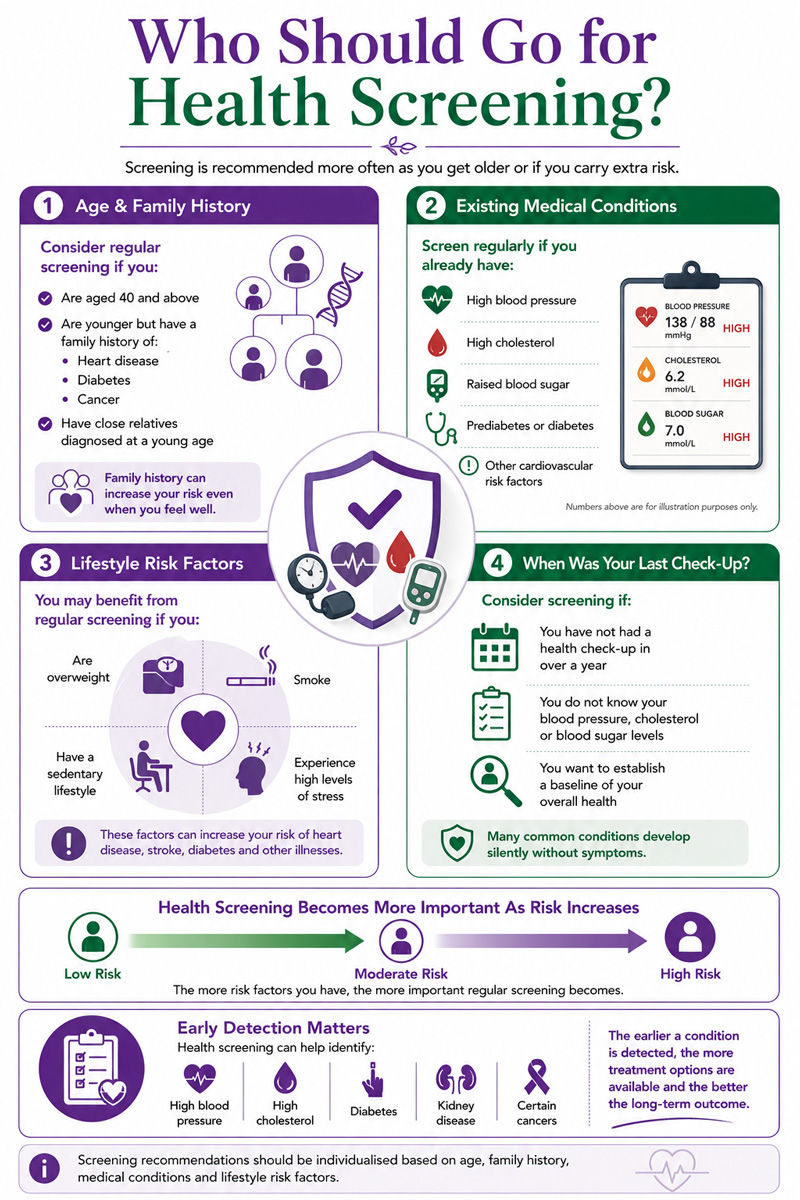
Screening is recommended more often as you get older or if you carry extra risk. Consider regular screening if you:
Are aged 40 and above, or younger with a family history of heart disease, diabetes or cancer
Already have high blood pressure, high cholesterol or raised blood sugar
Are overweight, smoke, or have a sedentary or high-stress lifestyle
Have not had a check-up in over a year
What a Health Screening Includes
A typical screening combines a doctor's review with measurements and laboratory tests. Core components usually include:
Blood pressure, heart rate, height, weight and BMI
Blood glucose and HbA1c to check for diabetes or prediabetes
A lipid panel for cholesterol and triglycerides
Kidney and liver function, and a full blood count
Urine tests and, where appropriate, cancer screening
Additional tests can be added based on your age, sex and personal risk profile.
Health Screening by Age: A Simple Guide
As a general guide, the focus of screening shifts with age. Your doctor will tailor this to you.
Age Group | Typical Screening Focus |
20s–30s | Baseline checks — blood pressure, BMI, glucose and cholesterol; lifestyle and family-history review |
40s | Add closer cardiovascular and diabetes risk assessment; begin discussing relevant cancer screening |
50s and above | More frequent checks; colorectal and other recommended cancer screening; review of bone, eye and other age-related health |
How to Prepare for Your Screening
A little preparation makes your results more accurate:
Fast for 8–10 hours beforehand if blood sugar or cholesterol is being tested (plain water is fine)
Bring a list of your medications and any past results
Wear comfortable clothing for blood pressure and other measurements
Note any symptoms or concerns to raise with the doctor
Screening Packages, Costs and Subsidies
Costs depend on how comprehensive the package is and which add-on tests you choose. A basic screen is relatively affordable, while comprehensive packages with cancer markers and imaging cost more. Eligible Singaporeans can tap subsidy schemes such as CHAS and the national Screen for Life programme, and MediSave may apply for selected tests. Our team will explain exactly what is included and what you will pay before you proceed.
Understanding Your Results
A screening is only useful if the results are explained and acted upon. Our doctors review every result with you, flag anything outside the healthy range, and create a clear plan — whether that means lifestyle changes, a repeat test, or treatment for conditions such as high cholesterol or raised coronary artery disease risk.
How Often Should You Screen?
As a general guide, low-risk adults benefit from screening every 1–3 years, while those with existing conditions or strong risk factors may need more frequent checks. Your doctor will recommend an interval that suits you.
Don't Let These Myths Stop You
A few common misconceptions cause people to skip screening:
“I feel fine, so I don't need it.” Most early disease has no symptoms — feeling well does not rule it out.
“I'm too young.” Risk factors and some conditions appear earlier than people expect, especially with family history.
“It's too expensive.” Subsidies and basic packages keep essential screening affordable, and early detection saves cost later.
Frequently Asked Questions
How long does a health screening take?
The appointment itself is usually quick — blood and urine samples take a few minutes. Results are typically ready within a few days, after which your doctor reviews them with you.
Do I need to fast before screening?
For most blood tests, yes — fast for about 8–10 hours beforehand. Plain water is allowed. We will confirm based on your specific tests.
Can I use MediSave or CHAS?
Subsidies such as CHAS and MediSave may apply to certain tests depending on eligibility and indication. Our staff will advise you before your screening.
What happens if something is abnormal?
Your doctor will explain the finding, arrange any further tests needed, and start an appropriate management plan — you will not have to navigate it alone.
At what age should I start screening?
Many people start regular screening around 40, or earlier with risk factors or a family history of heart disease, diabetes or cancer. Your doctor can advise what suits you.
How often should I repeat a health screening?
Often every 1–3 years for low-risk adults, and more frequently if you have existing conditions or higher risk. Your doctor will set the right interval.
Can I eat or drink before the appointment?
If fasting tests are planned, avoid food and sugary drinks for 8–10 hours. Plain water is fine and helps with blood taking.
Is health screening the same as a medical check-up for work or insurance?
There can be overlap, but work, insurance or pre-employment checks have specific required tests. Let us know the purpose so the right tests are included.
Should I still screen if I exercise and eat well?
Yes. A healthy lifestyle lowers risk but does not remove it entirely — genetics and other factors still matter, so screening remains worthwhile.
Will I get my results explained, or just a report?
Our doctors review your results with you, explain what they mean, and agree on next steps — rather than simply handing over a report.
Can health screening detect cancer?
Certain screening tests can help detect some cancers earlier or flag the need for further investigation. No screen detects every cancer, so your doctor will recommend what is appropriate for you.
Do I need a referral to get screened?
No referral is needed — you can arrange a screening directly with the clinic.
Book Your Health Screening in Yishun
To arrange a health screening tailored to your age and risk, visit our Yishun health screening page or WhatsApp / call 6721 9796. Nee Soon Clinic is at 779 Yishun Ave 2, serving the Yishun, Khatib and Thomson community.
Disclaimer: The information provided in this article is for informational purposes only and is not intended as a substitute for professional medical advice, diagnosis, or treatment. Always seek the advice of your physician or other qualified health provider with any questions you may have regarding a medical condition. The content is not intended to be a comprehensive source of information and should not be relied upon as such. Reliance on any information provided in this article is solely at your own risk. The authors and the publisher do not endorse or recommend any specific tests, physicians, products, procedures, opinions, or other information that may be mentioned in the article. Any reliance on the information in this article is solely at the reader's own risk.
779 Yishun Ave 2, #01-1547, Singapore 760779
Tel: 6721 9796
