Preserving Prosperity By Extending Health Span Of Society One Patient At A Time


Nee Soon Clinic
29 Apr 2026
Tirzepatide Weight Loss Singapore: How to Maximise Results (Doctor Guide)
Tirzepatide Weight Loss Singapore: How to Maximise Results (Doctor Guide)
Weight loss injections have significantly changed how obesity and metabolic conditions are managed. In Singapore, tirzepatide is increasingly prescribed under medical supervision for individuals with excess weight and associated metabolic risk.
However, weight loss outcomes are determined by how you structure:
Nutrition
Exercise Intensity
Hydration
Patients who optimise these consistently achieve better fat loss, improved tolerability, and more sustainable long-term results.
What Is Tirzepatide and How Does It Work?
Tirzepatide is a dual incretin receptor agonist targeting GLP-1 and GIP pathways, which regulate appetite, glucose metabolism, and energy balance.
Through this dual mechanism, it:
suppresses appetite via hypothalamic signalling
slows gastric emptying
enhances satiety
improves insulin sensitivity
The result is a sustained reduction in caloric intake, though the magnitude of response varies depending on individual physiology, baseline insulin resistance, and behavioural factors.
Why Lifestyle Still Determines Results
Despite strong pharmacological effects, tirzepatide does not override fundamental metabolic physiology.
During weight loss, the body:
reduces resting energy expenditure
increases metabolic efficiency
breaks down both adipose tissue and lean mass
Without proper support, this leads to:
disproportionate lean mass loss
metabolic adaptation and slowdown
earlier plateaus
increased risk of rebound weight gain
This explains why outcomes vary significantly between patients on identical dosing protocols.
The Doctor Framework: What Actually Drives Results
Tirzepatide modifies appetite and metabolism, but your habits determine body composition, tolerability, and sustainability.
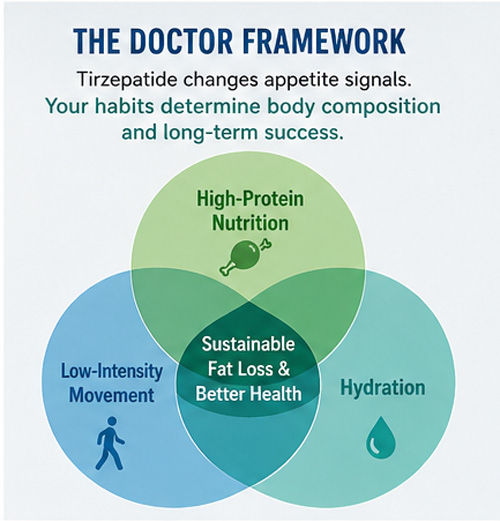
Three pillars determine outcomes:
high-protein, structured nutrition
low-intensity, consistent movement
adequate hydration
1. High-Protein Structured Nutrition
A high-protein first meal (25–35g) amplifies tirzepatide’s effect and stabilises appetite across the entire day.

Tirzepatide suppresses appetite centrally via GLP-1 and GIP signalling in the hypothalamus. Protein intake adds a critical peripheral component.
Protein consumption stimulates satiety hormones including:
peptide YY (PYY)
GLP-1
cholecystokinin (CCK)
while suppressing ghrelin.
This creates a dual-layer appetite control system:
central suppression from the drug
peripheral reinforcement from dietary protein
The result is more stable appetite regulation, reduced cravings, and improved dietary adherence.
Protein and Gastric Emptying
Tirzepatide slows gastric emptying, contributing to prolonged fullness but also potential symptoms such as nausea or bloating.
Protein, when consumed in whole-food form,:
slows digestion in a controlled, physiologic manner
promotes steady gastric transit
reduces erratic gastric stasis
This helps improve GI tolerability, particularly in early treatment phases.
Blood Glucose Stability
A high-protein first meal reduces postprandial glucose excursions and minimises reactive hypoglycaemia.
This stabilises central energy signalling and reduces:
late-day cravings
compensatory overeating
erratic hunger patterns
Muscle Preservation (Critical Clinical Priority)
GLP-1/GIP-based therapies can result in 15–40% of total weight loss originating from lean mass.
Without sufficient protein:
muscle protein breakdown increases
basal metabolic rate declines
long-term fat loss efficiency worsens
Protein intake of:
~1.2–1.5 g/kg/day
supports muscle protein synthesis and preserves metabolic function.
Lean mass preservation is the single most important determinant of long-term metabolic success.
First Meal Programming Effect
The first caloric intake of the day influences:
circadian appetite signalling
downstream hormonal responses
food choice behaviour
A high-protein first meal reduces total daily caloric intake and enhances satiety signalling. On tirzepatide, this effect is amplified due to already suppressed appetite pathways.
What a Clinical Trial Showed
A 12-week clinical study in overweight adolescents compared three groups: a high-protein breakfast (35g protein), a normal breakfast (13g protein), and skipping breakfast.
The results showed that only the high-protein group experienced meaningful benefits — they reduced body fat (−0.4 kg vs +1.6 kg), naturally ate less (−1,700 kJ vs +1,500 kJ), and reported lower hunger levels throughout the day.
These findings highlight that high protein breakfast drives better appetite control and fat loss outcomes. (Leidy et al., 2015)
Practical Example (Whole-Food Based)
3-egg omelette with mixed vegetables (spinach, mushrooms, peppers, onions, tomatoes) + High Quality Fresh Cheese OR Pure Greek Yogurt OR High Quality Almonds
Provides:
~25g high-quality protein
fibre for gut signalling and satiety
stable and sustained energy release
Avoid reliance on:
protein powders
ultra-processed “high-protein” products
liquid meal replacements
Whole-food protein produces stronger satiety signalling and better long-term adherence.
2. Low-Intensity Movement: The Correct Exercise Strategy

On tirzepatide, the objective is not performance optimisation — it is metabolic preservation.
Tirzepatide induces a low energy availability state due to reduced caloric intake. This fundamentally changes how the body responds to exercise.
Why High-Intensity Training Can Backfire
In a calorie-restricted state:
glycogen availability is reduced
recovery capacity is impaired
cortisol levels may rise
High-intensity training under these conditions can:
increase fatigue
accelerate lean mass loss
reduce adherence over time
Why Low-Intensity Movement Is More Effective
Low-intensity activity:
relies primarily on fat oxidation
requires minimal recovery
produces a lower stress response
This aligns more closely with the metabolic environment created by tirzepatide.
Practical Movement Target
30–60 minutes of daily walking
conversational pace
consistent and sustainable
Resistance Training (Minimum Effective Dose)
2–3 sessions per week
light to moderate intensity
Primary goal:
preserve lean mass, not maximise hypertrophy or performance
Interaction with Incretin Physiology
Exercise enhances:
insulin sensitivity
mitochondrial efficiency
incretin responsiveness
It also supports gut microbiota diversity, increasing short-chain fatty acid production, which contributes to improved metabolic signalling and appetite regulation.
Research Insights Exercise and Weight Loss
Clinical evidence from GLP-1 trials and weight loss research shows that preserving lean mass is critical during treatment. Consistent lower-intensity movement is more sustainable and supports long-term fat loss outcomes.
3. Hydration Strategy: The Most Underrated Factor
Hydration directly influences side effects, metabolic stability, and overall treatment tolerance on tirzepatide.
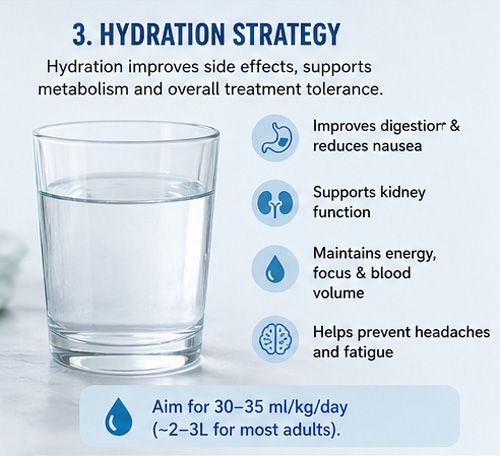
Tirzepatide reduces both appetite and spontaneous fluid intake while slowing gastric emptying. This creates multiple downstream physiological effects.
GI Tolerability (Primary and Most Important)
Delayed gastric emptying can lead to:
nausea
bloating
constipation
Adequate hydration:
improves gastric motility
reduces gastric stasis
supports smoother intestinal transit
Mechanistically:
sufficient luminal water content enhances peristalsis
reduces visceral hypersensitivity
lowers nausea perception
Volume Status and Orthostatic Symptoms
Reduced intake increases risk of relative hypovolemia, which may present as:
dizziness
fatigue
light-headedness
Hydration maintains:
intravascular volume
cerebral perfusion
blood pressure stability
Renal Protection
Low fluid intake increases the risk of pre-renal azotemia.
Adequate hydration:
preserves renal perfusion
maintains glomerular filtration rate (GFR)
reduces risk of acute kidney stress
Electrolyte Stability
Reduced intake and nausea can disrupt:
sodium balance
potassium balance
Hydration supports:
neuromuscular function
cardiac stability
systemic homeostasis
Appetite and Satiety Signalling
Hydration contributes to satiety through:
gastric distension
vagal signalling
This reinforces GLP-1 pathways and reduces the likelihood of mistaking thirst for hunger.
Metabolic Efficiency
Adequate hydration supports:
lipolysis
enzymatic activity
mitochondrial energy production
Headache and Fatigue Prevention
Hydration stabilises:
cerebral blood flow
osmotic balance
perceived energy levels
Practical Target
30–35 ml/kg/day (~2–3L daily for most adults)
Many patients fall below this due to appetite suppression and reduced thirst signalling.

Expected Results and Timeline
Patients typically experience:
early appetite suppression
progressive weight reduction
plateau phases over time
Based on large-scale clinical trials such as SURMOUNT-1:
~0.5–1 kg per week weight loss may occur during active phases, depending on baseline weight, adherence, and metabolic factors.
Common Mistakes
inadequate protein intake
excessive exercise intensity
insufficient hydration
unrealistic expectations of medication alone
Clinical Summary
High-Protein Breakfast (25–30g)
Daily Low-Intensity Movement (30–60 min)
Hydration (2.5-4L per day)
Final Takeaway
Your habits strongly influence the long-term Tirzepatide weight loss outcomes.
Disclaimer: The information provided in this article is for informational purposes only and is not intended as a substitute for professional medical advice, diagnosis, or treatment. Always seek the advice of your physician or other qualified health provider with any questions you may have regarding a medical condition. The content is not intended to be a comprehensive source of information and should not be relied upon as such. Reliance on any information provided in this article is solely at your own risk. The authors and the publisher do not endorse or recommend any specific tests, physicians, products, procedures, opinions, or other information that may be mentioned in the article. Any reliance on the information in this article is solely at the reader's own risk.
For more information you may visit: https://mounjaro.lilly.com/
779 Yishun Ave 2, #01-1547, Singapore 760779
Tel: 6721 9796
