Preserving Prosperity By Extending Health Span Of Society One Patient At A Time


Nee Soon Clinic
9 Jun 2026
Keeping Grafts Patent After Heart Bypass Surgery
After heart bypass surgery, the long-term goal is to keep your new grafts open and flowing — what doctors call graft patency. Keeping bypass grafts open is not a matter of luck: it depends heavily on the medications you take and how well your risk factors are controlled.
This doctor's guide explains why grafts can narrow over time and the proven steps that help your grafts stay patent for as long as possible.
What "Graft Patency" Means
A graft is patent when it remains open and carries blood freely to the heart muscle. Patency is what delivers the benefits of bypass surgery — relief from chest pain and a lower risk of future heart attacks. When a graft narrows or blocks, those benefits are lost, so protecting patency is the central aim of life after coronary artery bypass.
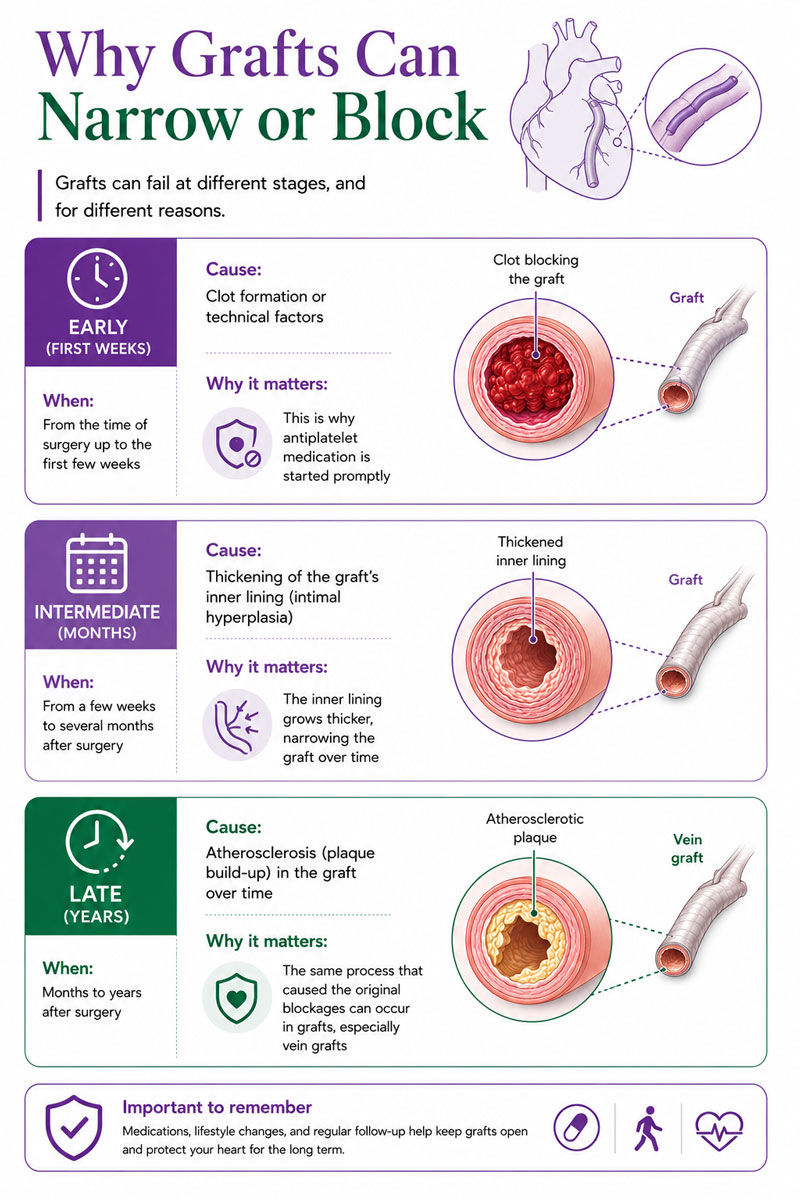
Why Grafts Can Narrow or Block
Grafts can fail at different stages, and for different reasons:
Early (first weeks): clot formation or technical factors — this is why antiplatelet medication is started promptly
Intermediate (months): thickening of the graft's inner lining (intimal hyperplasia)
Late (years): the same atherosclerosis that caused the original blockages can build up in grafts, especially vein grafts
Not all grafts are equal. Arterial grafts (such as the internal mammary artery) tend to stay open far longer than vein grafts taken from the leg. Regardless of graft type, controlling cholesterol, blood pressure, diabetes and smoking dramatically improves how long they last.
The Medications That Keep Grafts Open
Medication is the backbone of graft protection. Most patients remain on a combination for the long term:
Antiplatelet therapy — aspirin is usually lifelong; some patients take a second antiplatelet for a defined period to prevent clots
A high-intensity statin to drive down LDL cholesterol and stabilise plaque in the grafts and native arteries
Blood pressure medicines to reduce mechanical stress on the grafts
If LDL stays above target on a statin, or statins are not well tolerated, additional options such as PCSK9 inhibitor therapy may be considered by your doctor.
Lifestyle That Protects Your Grafts
Day-to-day habits have a powerful, lasting effect on graft survival:
Stop smoking completely — smoking is the single biggest reversible threat to graft patency
Eat a heart-healthy diet low in saturated fat and salt to support your cholesterol and blood pressure targets
Stay active — complete cardiac rehab and keep up regular exercise
Keep diabetes tightly controlled, as high blood glucose accelerates graft disease
Maintain a healthy weight and manage stress and sleep
Monitoring and Follow-Up
Regular review lets your doctor catch problems early and keep your targets on track. Typical follow-up includes:
Lipid panel to confirm LDL is at goal
Blood pressure checks — understanding the link between blood pressure and heart disease helps you stay motivated
HbA1c if you have diabetes or prediabetes
Prompt review of any new chest discomfort, breathlessness or reduced exercise tolerance
Arterial vs Vein Grafts: What to Expect
Not all grafts behave the same way over time. This general comparison explains why, but your surgeon's choice depends on your individual anatomy.
Graft Type | What to Know |
Arterial grafts (e.g. internal mammary artery) | Tend to stay open the longest — often well beyond a decade — and are preferred where suitable |
Vein grafts (taken from the leg) | More variable over time and more dependent on tight control of cholesterol, blood pressure, diabetes and not smoking |
Signs a Graft May Be Struggling: When to Seek Help
Grafts narrowing again can cause symptoms similar to the original heart problem. Seek medical advice promptly — or call 995 in an emergency — if you notice:
Chest pain, pressure or tightness, especially on exertion
Breathlessness that is new or worsening
Reduced ability to do activities you previously managed
Pain spreading to the arm, jaw, neck or back
Frequently Asked Questions
How long do bypass grafts last?
It varies by graft type and risk-factor control. Arterial grafts often remain open for well over a decade; vein grafts are more variable. Tight control of cholesterol, blood pressure, diabetes and smoking is the key to longevity.
Do I really need to take aspirin forever?
For most patients, lifelong antiplatelet therapy is recommended to keep grafts open. Always follow your doctor's specific advice and do not stop without discussing it first.
Can a blocked graft be treated?
Sometimes — options may include a stent or, less commonly, repeat surgery. Prevention through medication and lifestyle is far preferable, which is why secondary prevention matters so much.
Will lowering my cholesterol really protect the grafts?
Yes. Strong evidence shows that lowering LDL cholesterol reduces graft disease and cardiovascular events after bypass surgery.
Do all bypass grafts eventually block?
No. Many grafts — especially arterial grafts — stay open for many years. Good control of cholesterol, blood pressure, diabetes and smoking strongly improves how long grafts last.
How is graft patency checked?
If symptoms or test results raise concern, your doctor may arrange investigations such as stress testing or imaging. Routine review of symptoms and risk factors is also part of follow-up.
Can a blocked graft be treated?
Sometimes — options may include a stent or, less commonly, repeat surgery. Prevention through medication and lifestyle is far preferable, which is why secondary prevention matters.
Does my cholesterol level really affect my grafts?
Yes. Strong evidence shows that lowering LDL cholesterol reduces graft disease and cardiovascular events after bypass surgery.
Is exercise safe for my grafts?
Regular activity is encouraged and protective after recovery and cardiac rehab. Your doctor can advise the right level for you.
What is the single most important thing I can do?
Stop smoking completely. It is the biggest reversible threat to graft survival, alongside taking your medicines and keeping cholesterol and blood pressure at target.
Can stress affect my grafts?
Chronic stress can raise blood pressure and affect lifestyle habits, indirectly impacting your heart. Managing stress and sleep supports your overall cardiovascular health.
Speak to Our Doctors
Our doctors at Nee Soon Clinic in Yishun can help you protect your grafts with a clear medication plan, cholesterol and blood pressure targets, and lifestyle support. WhatsApp or call 6721 9796, or learn more about our coronary artery disease care.
Disclaimer: The information provided in this article is for informational purposes only and is not intended as a substitute for professional medical advice, diagnosis, or treatment. Always seek the advice of your physician or other qualified health provider with any questions you may have regarding a medical condition. The content is not intended to be a comprehensive source of information and should not be relied upon as such. Reliance on any information provided in this article is solely at your own risk. The authors and the publisher do not endorse or recommend any specific tests, physicians, products, procedures, opinions, or other information that may be mentioned in the article. Any reliance on the information in this article is solely at the reader's own risk.
779 Yishun Ave 2, #01-1547, Singapore 760779
Tel: 6721 9796
